
McDonalds Menu EDA
Overview
This project analyzes the nutritional content of 260 McDonald’s US menu items to uncover health risks, identify high-calorie categories, and provide actionable recommendations for both consumers and McDonald’s. The work is inspired by growing obesity rates in the US and aims to educate consumers on healthier choices while suggesting strategic improvements for the company.
Tools Used
Python
Libraries
Pandas, Seaborn, Matplotlib, Plotly, Statsmodels
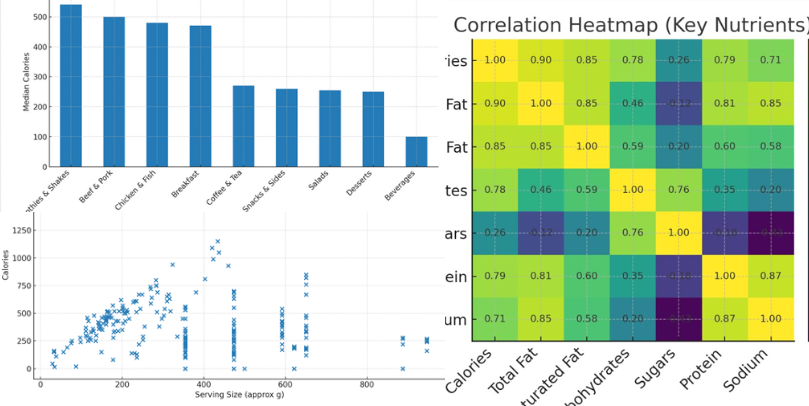
The analysis revealed several important insights. A total of 121 menu items were identified as high-risk, each exceeding 100% of the recommended daily limits for nutrients such as sodium, sugar, and fat. Desserts, beef and pork dishes, and breakfast items emerged as the most calorie-dense categories. Additionally, portion sizes were found to have a significant impact, with upsizing increasing calorie counts disproportionately compared to serving size. Finally, strong correlations were observed between calories and other nutrients, particularly saturated fat (0.85), protein (0.79), and carbohydrates (0.78), highlighting their close relationship in driving overall energy content.
For consumers, the findings suggest avoiding upsizing in calorie-heavy categories and instead choosing items with lower calorie density, such as salads or apple slices. It is also important to monitor sodium and sugar intake by leveraging the nutritional data provided on menus. For McDonald’s, introducing more portion-controlled options could help consumers make healthier choices. Additionally, clearly displaying nutrient density on menus and reformulating high-sugar desserts and beverages would further promote balanced eating while aligning with public health goals.